





In a bilingual (and increasingly trilingual) city like Hong Kong, children often learn their second language in schools through lessons and course work. However, if you want to help your child develop native-like bilingual proficiency, having a strategic home learning plan matters more than you think, especially if you start early. A lot of parents may wonder how to get started or which strategy is best. This article will walk you through why a bilingual home learning strategy matters, how to get started, the pros and cons of different home bilingual strategies, and provide simple tips for raising bilingual children at home.
Why do I need a strategy for bilingual learning at home?
Provide a strong language foundation
Home is your child’s first language environment from birth. Infants receive their earliest and most impactful language input from their parents and caregivers who they interact with every day. What languages you use, the duration, and the quality of the interactions are what determine bilingual development before school age. Children learn best when adults respond to them, ask questions, and create back-and-forth conversations. Moreover, meaningful daily routines such as mealtime, playtime, and bedtime stories not only make language learning more enjoyable but also provide a strong bilingual environment and foundation.
Maximize the resources that you already have
Many families already have the right resources, but still struggle with raising bilingual children. Why does this happen? Often, families don’t set clear goals, don’t have a consistent strategy, or simply don’t know where to start. A good strategy helps you maximise what you can naturally provide and guides you in implementation. For example, if you want your child to pick up Mandarin, you might intentionally create more interaction time with Mandarin-speaking caregivers. If your family lacks English fluency, you may need to consider hiring an English tutor or increasing external exposure by choosing a school with a suitable language programme to achieve your desired goals.
You don’t need to resort to passive learning
Many parents use online videos to teach their children languages, and believe that it is a good way to create a bilingual environment at home. Keep in mind that most experts do not recommend screen time for children under 2, and limited screen time from there onwards. While screen time can provide some additional input and stimulation, it can never replace real interactions with parents and caregivers.
 Effective Bilingual Home-Learning Strategies
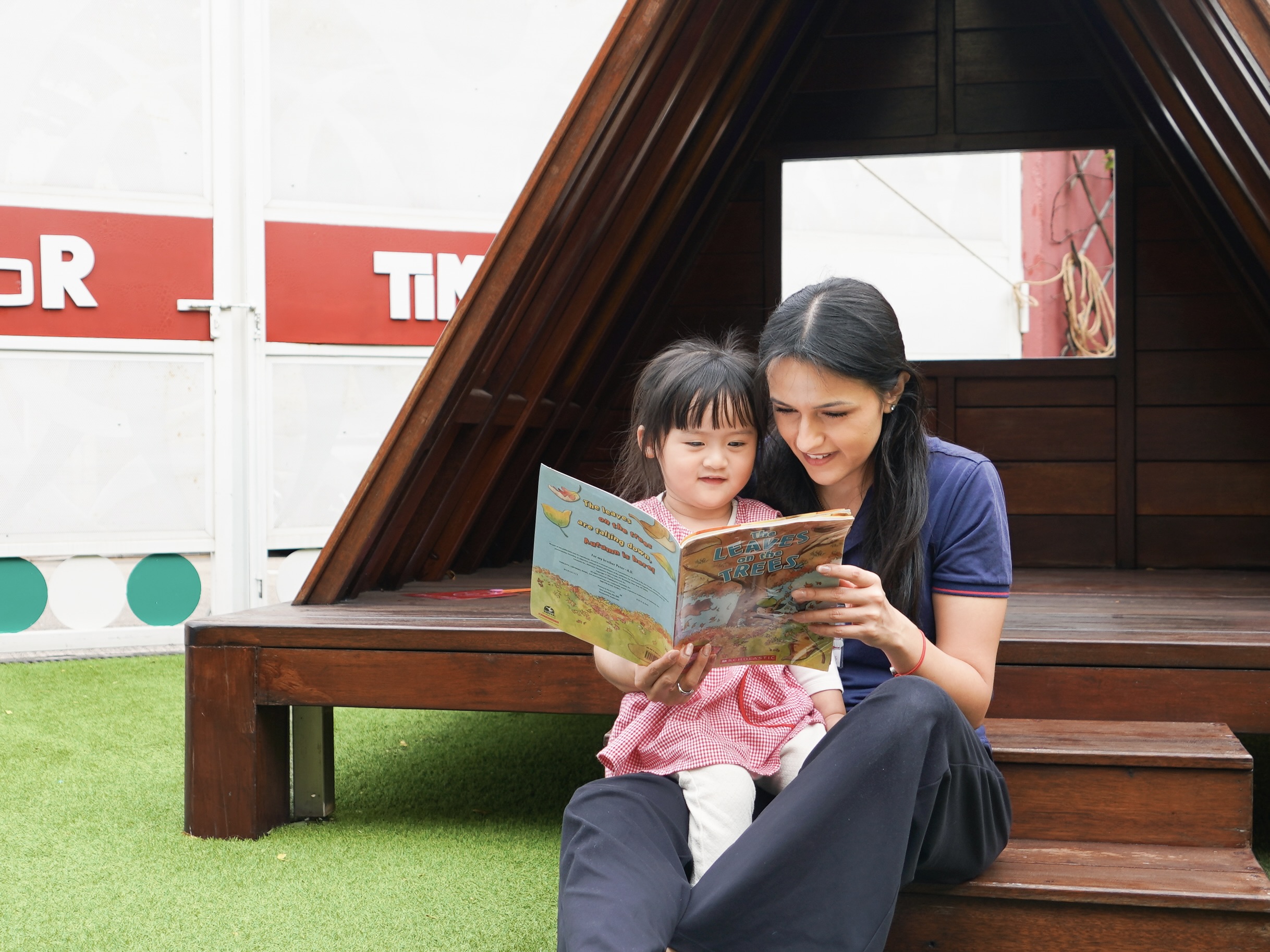 Effective Bilingual Home-Learning Strategies
After taking into account your daily routines, family background, and language goals for your child, pick one of the home bilingual strategies below that best suits your needs.
OPOL (One Parent, One Language)
OPOL is an approach where each parent consistently speaks one language to their child. For example, mom speaks Cantonese, and dad speaks English. It sets clear language boundaries, and your child will naturally understand how to use different languages with different caregivers. However, it often requires high effort and discipline from both parents to implement.
Suitable for: Bilingual families with two distinct language speakers who want their children to learn both languages.
MLAH (Minority Language at Home)
The MLAH approach means both parents speak only the minority language (ML) at home, while your child learns the community language (CL) outside. For example, Korean parents living in Hong Kong may choose to speak only Korean at home to preserve the minority language, while their child learns the CL, such as English or Cantonese, through school or peers. This strategy relies heavily on outside exposure for the second language.
Suitable for: Immigrant families or monolingual families whose parents are both native speakers of the minority language. This is often the most effective way to protect a minority language at home when the community language is dominant outside the home.
Time and Place Method
With this method, specific times, routines, or locations are assigned for each language. For example, parents may establish routines such as “Mandarin weekdays” or “English bedtimes”; you may also use a specific language when visiting grandparents or in public settings. Your child will learn to switch languages according to the time of day or the location they are in.
Suitable for: Busy families whose parents are also bilingual. It also works well if only one parent has a better command of the languages and can be committed. Equal exposure can be achieved by splitting the input based on days or places.
Mixed Approach
In this approach, families switch languages naturally depending on the context, situation, or caregiver interaction. Your child may use English to talk about their school day, and switch to Cantonese when talking to a waiter at a restaurant. This is also the most common approach for local Hong Kong parents.
Suitable for: Busy families whose parents are bilingual and want a higher level of flexibility in language use. The fluidity facilitates more natural communication and code-switching habits.
4 Tips for Promoting Bilingualism at Home
No matter which bilingual or even multilingual parenting approach you choose, it is important to create a rich bilingual environment and provide a lot of opportunities for your child to use both languages.
Narrate your actions
Try narrating your actions during daily routines. It could be morning routine, bathtime, or cooking time, e.g., while cleaning up, you can say, “Mama’s wiping the table now, look at how messy it is! There’s rice everywhere!” Children can then associate vocabulary with real objects and actions, naturally increasing language exposure in daily life.
Accompanied playtime
While there is a time and place for unaccompanied playtime, accompanied play is still the best for language learning. During activities, guide your child with questions such as “What do you think?”, “How did the car roll so far?”,“What color is the rabbit?”. This helps to integrate language learning into playtime – something your child naturally enjoys.
Connect language to culture and identity
Children learn a language more deeply when it is connected to meaningful cultural experiences. Celebrating holidays, such as the Chinese New Year in Mandarin, reading the history of Thanksgiving, or listening to English Christmas Songs are all great ways to build emotional connections and strengthen language identity.
Correct grammar and enrich vocabulary
Children who are just learning to speak will often make grammatical mistakes. When you hear this, repeat their sentences back to them with proper grammar and pronunciation. You can also expand on your child’s sentences by adding details like “yes, that rabbit is white, and look how high it hops!” Your child will naturally pick up grammatical rules and new vocabulary as you speak.
Reminders for bilingual and monolingual families
For Bilingual Families: Ensure your child receives enough exposure and consistency in both home languages, and make the language learning activities diverse and fun!
For Monolingual Families: Remember to support second language learning through other means, such as choosing a suitable school, taking your child out into their community, and arranging playdates.
Read more: Public vs. Private schools in Hong Kong – Choosing the right one for your child
Conclusion
Language learning does not only happen in the classroom–it actually starts at home. The home environment and the role of caregivers are crucial parts of fostering bilingual development in early childhood. By understanding your family situation and language goals, you can choose a bilingual learning strategy that gives you clear guidance on which approach to use and even what types of schools may be suitable for your child. Just remember to always monitor your child’s developmental pace and adjust or even change approaches when needed to support their growth and achieve your desired language outcomes. Wishing you the very best on your child’s bilingual language journey!
To learn more about parenting and development, visit: https://form.tutortime.com.hk/parenting-and-development
Other Resources:
How to Continue Your Child’s Bilingual Learning at Home
How to Support Bilingual English and Mandarin learning at Home
Dual Language Learners: Considerations and Strategies for Home Visitors | HeadStart.gov


 Mon-Sat