





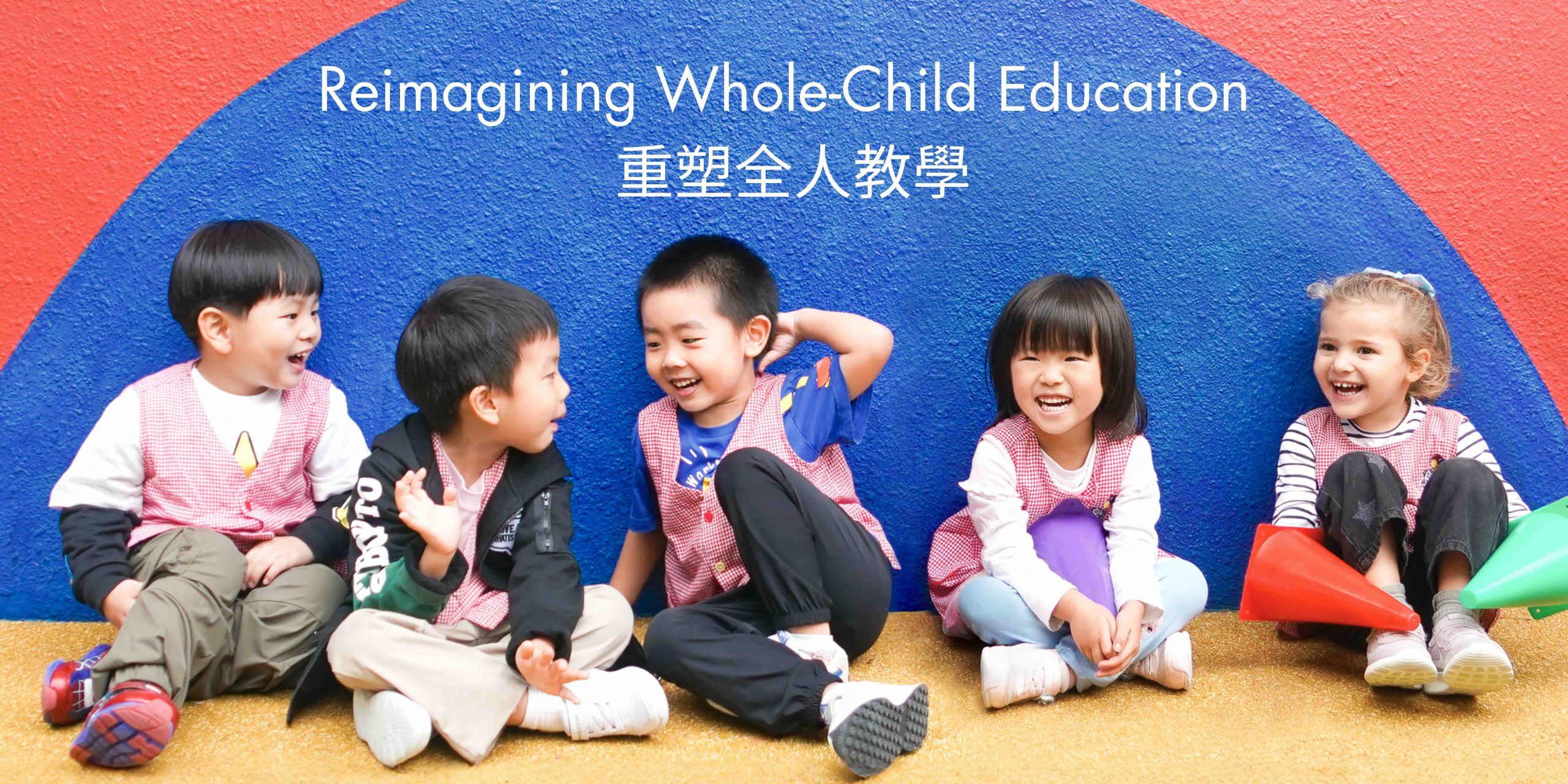
At Tutor Time, everything from our curriculum design to our campus environment is centered around developing the whole child without compromising on any aspects. On this page, you’ll learn about the pillars that form our approach and curriculum, our unique full-immersion language learning models, how we pioneer social & emotional learning in early education, and ultimately, what we envision for your child when they join us.
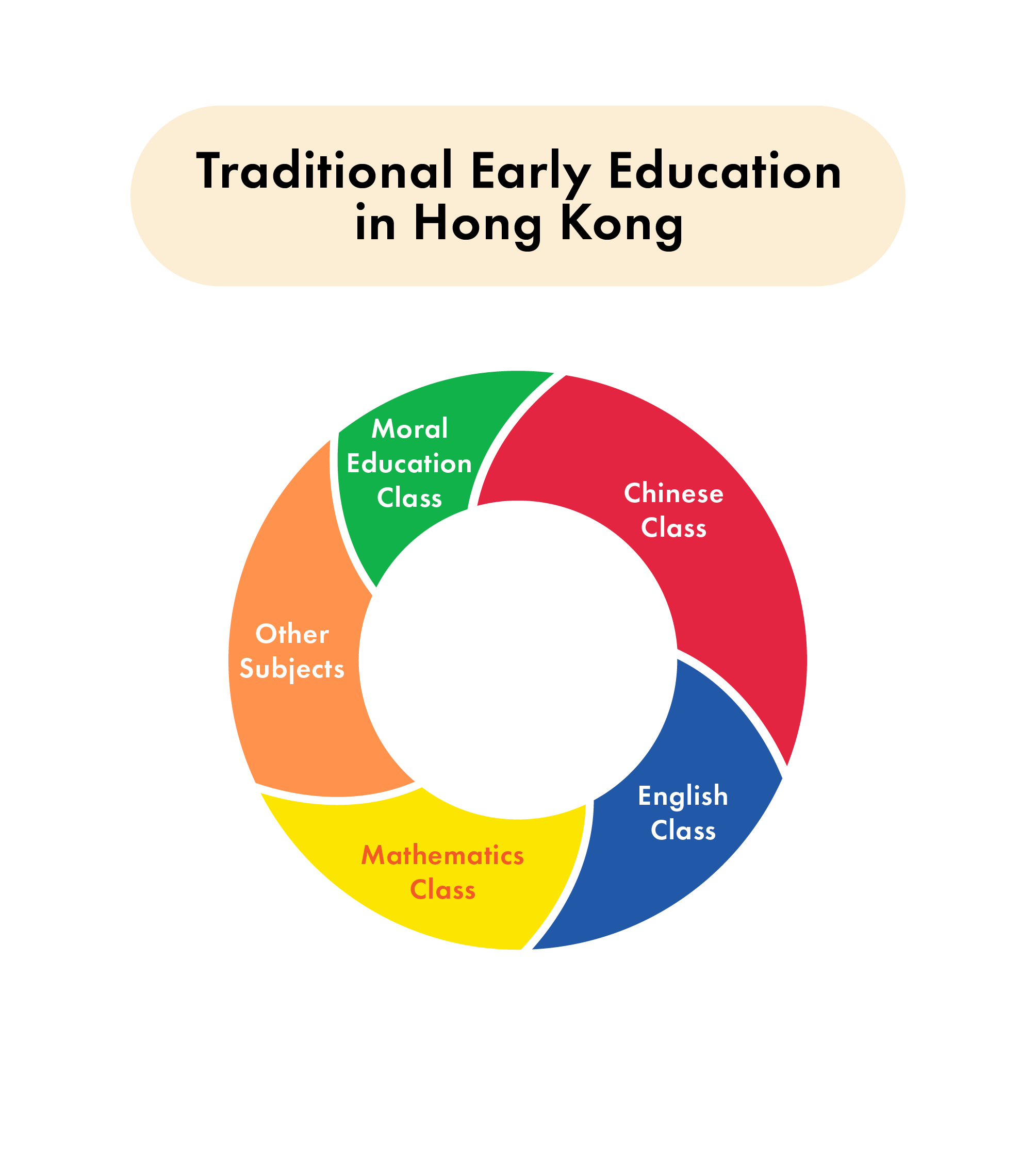
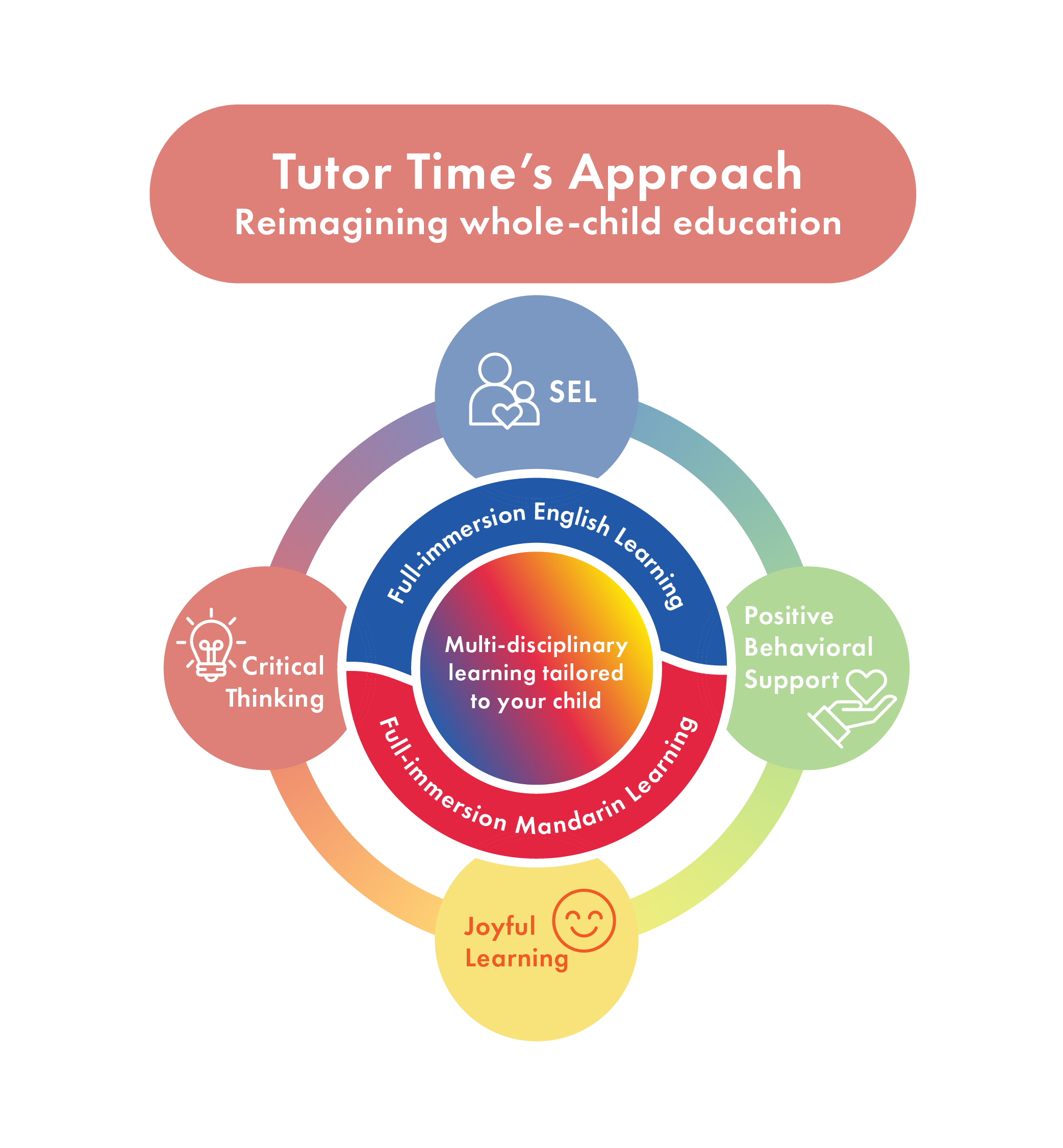
Table of contents
-
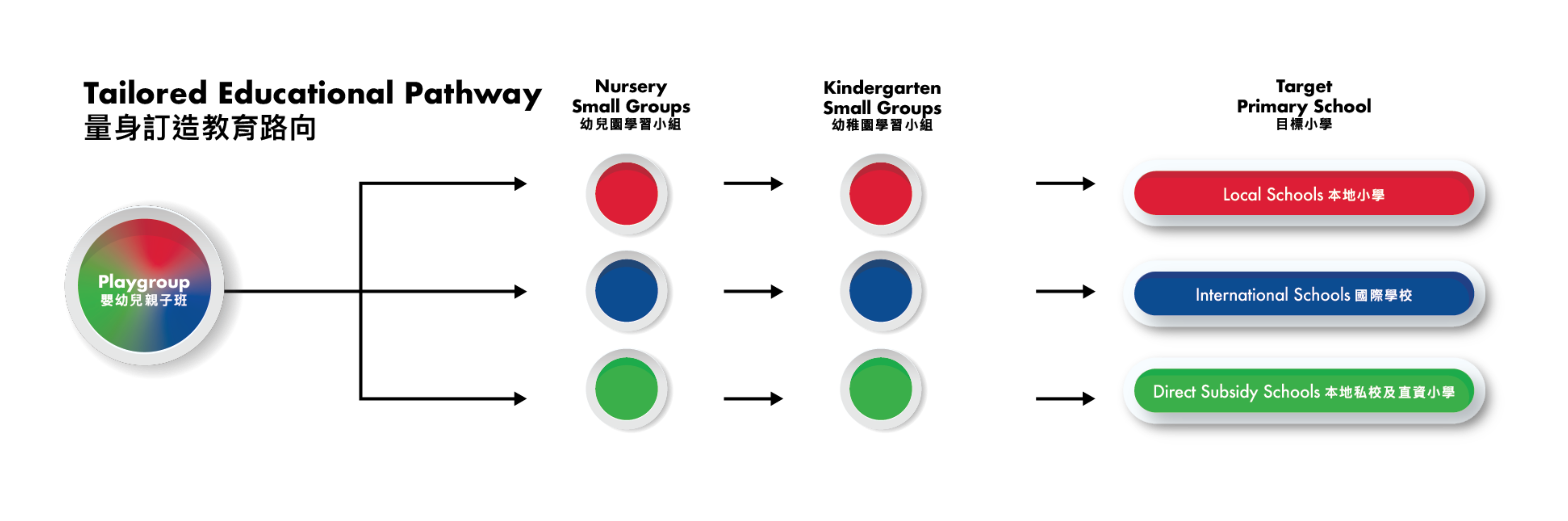
A tailored pathway for each child: How we implement personalized learning in a group setting
-
Full-immersion language learning: The difference between a traditional language class and full-immersion
-
Emphasizing emotional intelligence: Our SEL programs and Positive Behavioral Support
-
A reflection on the past 25 years: Imagining the Tutor Time of tomorrow
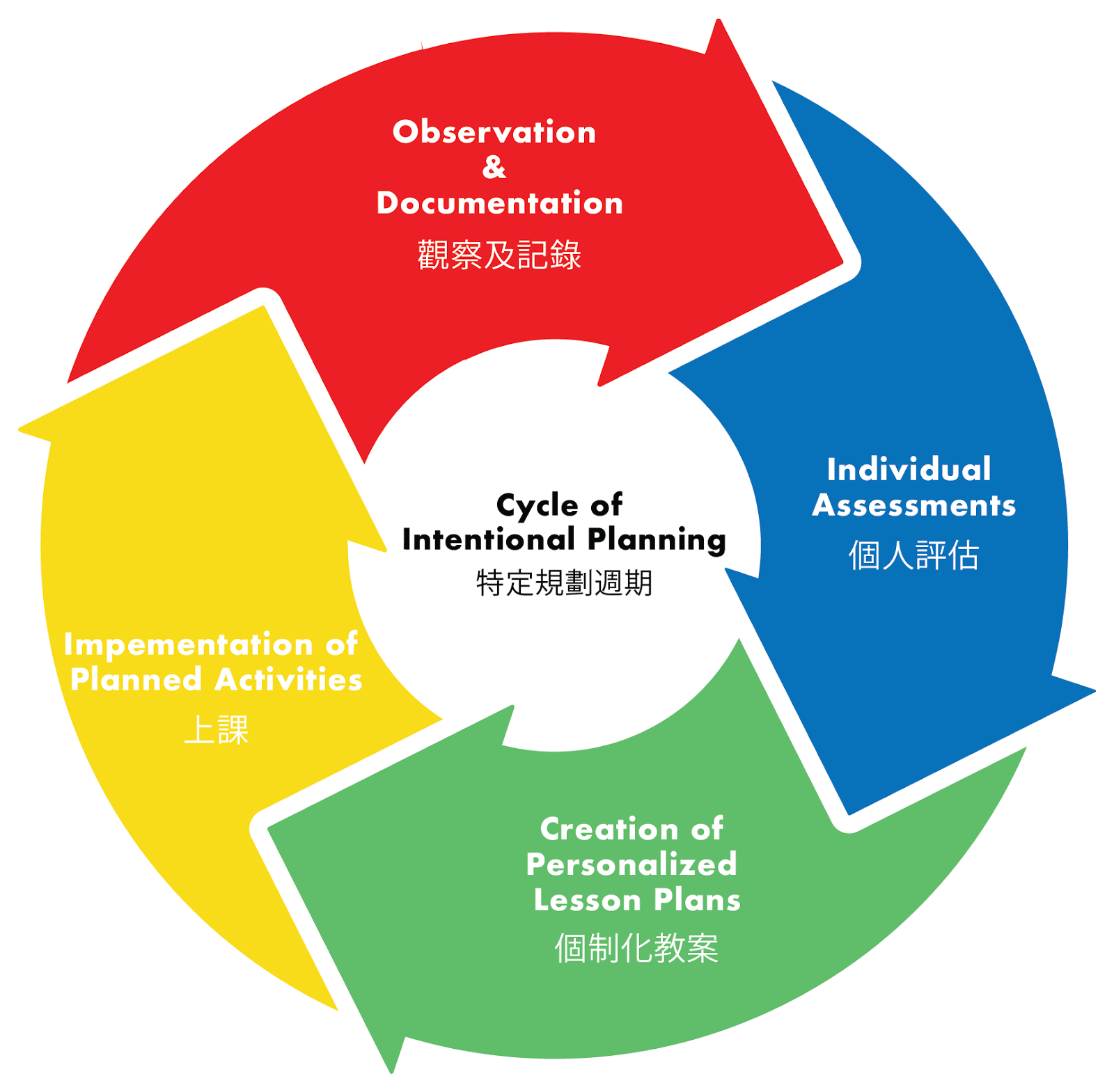
To implement personalized learning in a group setting, our teachers take advantage of small group time to give each child different activities. For example, if they notice your child excels in languages but needs to work on fine-motor skills, they will find 2-3 other students with similar needs and prepare a fine-motor activity during small group time.
In the long-run, we accumulate months of observations for each child, allowing us to paint a full picture of your child’s unique developmental trajectory. This is particularly useful as you begin planning the future of your child’s education.
Full-Immersion Language Learning
Structured English Immersion (SEI) programs were first introduced in Canada and the USA in the 1980s to help minority speakers learn English more effectively than traditional language classes. In 2001, after rapid success in Western countries, Tutor Time introduced Hong Kong’s first Full-Immersion English & Mandarin Bilingual Curriculum for preschoolers. Unlike fragmented language classes, full-immersion means that children have equal exposure to both English and Mandarin throughout their whole school day.
Traditional language learning
- Most of the subjects are taught in the majority language (in Hong Kong local schools, this is usually Cantonese, while in international schools, this is usually English).
- Minority/Second languages are taught as separate language classes (e.g. Mandarin Class or English Class).
- The ‘playground language’ is often the majority language.
Full-immersion language learning
- The school day is split evenly between English immersion and Mandarin immersion.
- During each language immersion section, all teachers and students speak just one language (including during playground time!)
- Children are exposed to both languages throughout all subjects and sections of the day.
Does full-immersion work?
Research consistently shows that students in full-immersion programmes develop stronger bilingual proficiency, more native-like pronunciation, greater mental flexibility, deeper cultural appreciation, and far more spontaneous speech than those in traditional language classes. Our classroom experiences align perfectly with these findings.
At Tutor Time, our students treat language as a tool for learning, not just a subject. They use both English and Mandarin authentically, driven by curiosity rather than memorisation. They actively explore topics, discuss ideas, and pick up teachers’ natural expressions. In this environment, children learn language by using it, and use language to facilitate their learning. This is what makes full immersion so powerful: it nurtures real fluency through daily use.
Emphasizing emotional intelligence (EQ)
Many schools treat social and emotional learning (SEL) as a subject, but opportunities to teach SEL can arise at any point throughout the day. That’s why we combine a structured and immersive approach for SEL for students starting in Nursery all the way through Kindergarten.
Structured SEL curriculum
For our SEL curriculum, we utilize a combination of materials from the USA-based program called Second Step, along with our very own SEL curriculum called The Emomo Program, which we developed with Learning Time Hong Kong.
The Emomo Program is designed to teach young learners the building blocks of SEL, and bridge the gap between abstract emotions and real life experiences. In summary, it aims to teach children:
- What emotions are and how they are commonly expressed
- How to identify emotions in themselves and others
- How to identify and communicate when emotions get out of control
Our teachers use The Emomo Program together with Second Step, which supplements with more role-play scenarios and stories. Second Step teaches our students:
- How to use healthy regulation strategies for big emotions
- How to form and maintain healthy relationships with peers
- Social skills like empathy, compassion, sharing, taking-turns, and more
Positive Behavioral Support – SEL in real-time
There are some SEL skills that cannot be taught until a specific situation arises. For example, we can teach children about the concept of sharing, but it isn’t until they have to share their favorite toy that they have to implement those skills.
This is where our Positive Behavioral Support (PBS) comes in. Every teacher that joins Tutor Time is trained in PBS so that they know how to turn challenging behaviors into learning opportunities.
A real example of how PBS plays out in class (names of students/teachers have been replaced)
Jeff is upset with Mike and hits him with a shaker rattle. Our teacher, Miss Katie, takes the two children aside to facilitate a positive interaction and allow them to talk about it, while giving Jeff a chance to apologize. Miss Katie then refers back to the class expectations, such as ‘being kind’, and asks Jeff if hitting is kind. Later in the lesson, Miss Katie intentionally pairs Jeff and Mike together to work on a cooperative activity together.
Unlike our structured SEL program, PBS allows us to address incidents as they occur so that children have it fresh in their minds, and to allow children to put their SEL skills to use. Together, they work hand-in-hand to create a comprehensive SEL system that permeates through our entire program.
A reflection on the past 25 years of Tutor Time
For 25 years, Tutor Time has had the privilege of nurturing children in Hong Kong through every shift in early childhood education. We’ve celebrated the big wins — like pioneering bilingual education in the early years (no, it doesn’t confuse your child!) — and we’ve adapted alongside families as the world has changed.
Today’s children are growing up in an unprecedented time. With AI making knowledge instantly accessible, and even thinking and creating on our behalf, the idea that preschool is just a “deliverer of knowledge” is outdated. This has led us to a simple yet profound question as we mark our 25th anniversary:
If traditional intelligence can be replicated by AI, what is the real purpose of early education?
Our answer now is clearer than ever. We are past the time of rote learning and memorization (though a strong academic foundation is still central to our curriculum).
We are entering the age of cultivating distinctly human abilities that no algorithm can replicate: deep emotional intelligence, critical thinking, resilience, and the intrinsic drive to learn that only comes about through joyful early experiences.
This isn’t just a new trend in education — it’s the heart of the whole-child education approach we’ve always believed in. As we enter our next chapter, we’re on a path to reimagine what whole-child education should look like, and we can’t wait for you to join us on this journey.
Want to see our classes in action?
Explore our programs for 3 to 6 months old
Wow Activity Group
(6 months to 2 years)
Nursery
(2 to 3 years)
Kindergarten
(3 to 6 years)
Extended Program
(3 to 6 years)
After School
with Friends
(2 to 6 years)


 Mon-Sat