





Nowadays, we see the term “learn-through-play” everywhere, but what does it actually mean? When children play, they are actually creating learning opportunities for themselves. For example, if their block tower topples over, they will have to figure out how to strengthen the structure, using logical reasoning to analyze and solve the problem. This is the essence of what we call play-based learning or learning-through-play—exploring and developing skills through the process of playing. This learning-through-play approach allows children to develop cognitive, physical, language, and social-emotional skills while naturally learning real-world problem-solving abilities.
The Real Benefits of Learning Through Play
Learning-through-play is not just a buzzword. A study of 290,000 students found that children who learned through play and as a result, had a happier learning experience, better math scores, and significantly higher language scores. The reason was surprisingly simple: learning-through-play reduced stress and cognitive load, freeing up children’s mental bandwidth to complete more complex tasks. In other words, happy children = better learning outcomes.
Cognitive Development
Activities that require trial-and-error and problem-solving naturally teach critical thinking skills. Even babies as young as 9 months start practicing trial-and-error, like when they try to figure out how to take their wooden blocks out of a box. Each ‘error’ or failed attempt prompts children to reevaluate their actions, which naturally builds critical thinking skills.
Real-World Skills
Skills learned through play transfer beyond academics. For example, role playing with dolls teaches children how to communicate and practice empathy; using fine-motor toys trains the skills needed for writing, tying shoe laces, brushing their teeth, and so on; playing board games teaches children patience, conflict resolution, and negotiation skills.
Language Development
Research has shown that play based learning helps to enhance language learning motivation and has a significant positive impact on language performance. Moreover, students who play multiplayer collaborative games have higher vocabulary test scores than single-player gamers. That’s because in an immersive playgroup setting, children are not only learning through traditional methods, they also benefit from social interactions, games, and contextual learning.
Learn more:Cognitive benefits of bilingualism – TutorTime
Social & emotional Intelligence
Play-based learning often involves interaction with others. Research has shown that structured learning games improve children’s social and emotional skills, such as cooperation, sharing, and understanding the feelings of others, as well as teaching them to manage emotions, deal with conflict, and develop empathy.
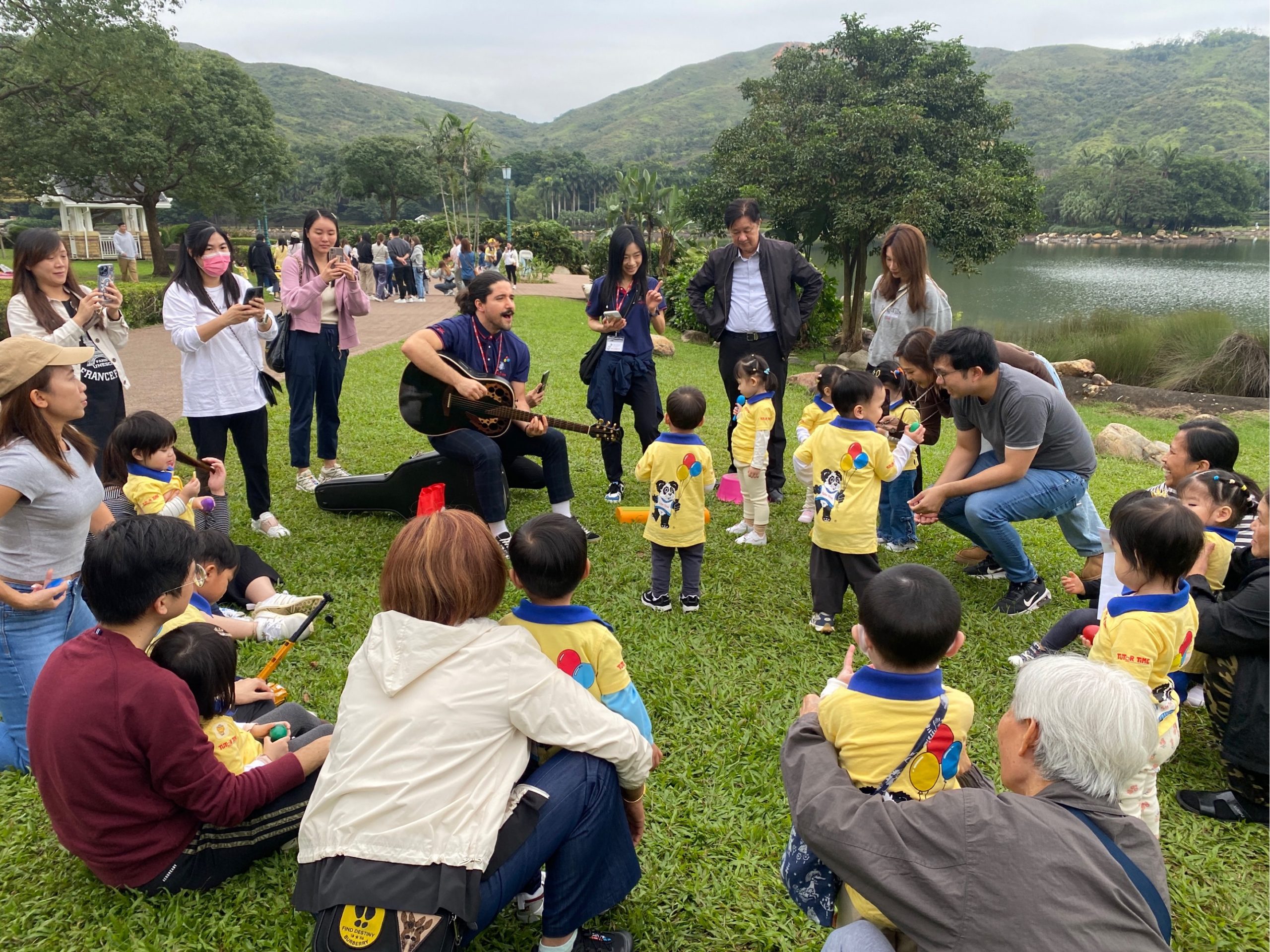
5 learning-through-play activities to try
Building blocks
Games that involve Lego, wooden blocks, or any kind of building blocks provide opportunities to learn about spatial reasoning, engineering, physics, and problem-solving skills. When children try to build a tower, they have to plan ahead to ensure it doesn’t fall, and if it does, they have to analyze why.
Role-playing
Research shows that role playing helps children build empathy, conflict resolution, collaboration, and communication skills. For example, your child might create a pretend restaurant with some peers and have assigned roles, like waiter, cashier, and so on. During their role play, they might encounter problems or decide to switch roles, prompting collaboration and communication.
Puzzles
Puzzles are a classic game that train children’s spatial awareness, logic, pattern recognition, and focus. Nowadays, there are many puzzle variations made for children at each stage of development – make sure to choose something age-appropriate and provide guidance when it’s needed.
Arts & crafts
Arts and crafts are not just about having fun. When children mix colors or materials like “red + blue = purple, what does red + white equal?” It prompts them to form hypotheses and test if they are correct – just like the scientific method. It’s also a great way to boost creativity. Research has found that open-ended activities significantly enhance children’s creative thinking.
Emotion games
The best time to learn about emotions is when your child is calm and neutral. For example, you can play a game of charades where one person acts out the emotion and the other person guesses what it is. Research shows that children who participate in playful emotional education activities develop their emotional intelligence faster than children who do not attempt these activities.
Conclusion
Maria Montessori once said that “play is the work of the child”, because it is through play that children are able to effortlessly weave ‘fun’ with learning. Nowadays, many educational approaches, including ours at Tutor Time, take inspiration from play-based learning, helping children build critical skills in cognitive, language, physical, and social-emotional development in a joyful way.
Discover how Tutor Time combines academic excellence with joyful learning: https://www.tutortime.com.hk/
References
- Yan, L. (2005). An investigation of the relationship between the open-endedness of activities and the creativity of young children. University of New Orleans.
An Investigation of the Relationship between the Open-Endedness of Activities and the Creativity of Young Children
- Hochschild Ovalle, H., Nussbaum, M., Claro, S., Espinosa, P., & Alvares, D. (2024). Happiness at School and Its Relationship with Academic Achievement. Education Sciences, 14(12), 1321.
Happiness at School and Its Relationship with Academic Achievement - Shen, Z., Lai, M., & Wang, F. (2024). Investigating the influence of gamification on motivation and learning outcomes in online language learning. Frontiers in Psychology, 15, 1295709.
Investigating the influence of gamification on motivation and learning outcomes in online language learning - Sundqvist, P. (2013, January). Categorization of digital games in English language learning studies: Introducing the SSI Model. In 20 years of EUROCALL: Learning from the Past, Looking to the Future. Proceedings of the 2013 EUROCALL Conference, Évora, Portugal.
Categorization of digital games in English language learning studies: Introducing the SSI Model - Özcan, S., & Sakız, H. (2025). Improving social-emotional skills for inclusion through traditional child games. Children and Youth Services Review, 108299.
Improving social-emotional skills for inclusion through traditional child games - Yan, L. (2005). An investigation of the relationship between the open-endedness of activities and the creativity of young children. University of New Orleans.
An Investigation of the Relationship between the Open-Endedness of Activities and the Creativity of Young Children


 Mon-Sat