





Nowadays, as parenting knowledge becomes more widespread, Hong Kong parents are placing greater emphasis on early childhood education. As children reach nursery age (2 years old), some of the most frequent questions we hear are “should I enrol my child in Nursery (PN) class?”, “Will skipping Nursery affect their chances of getting into Kindergarten?”, and “how do I choose the right Nursery program?” This article will introduce what a Nursery Program is, how to select the best nursery program for your child, and some key insights from our Tutor Time principals.
What is a Nursery Program?
Before diving into the specifics of Nursery Programs, it’s important to understand what it is. You may have heard the terms ‘Nursery’, ‘PN’ and ‘N class’ – these all generally refer to Nursery Programs in Hong Kong. In places like the USA, Europe or Mainland China, Nursery Programs are often more like daycare services that include nap time and meal time. While daycares do exist in Hong Kong, Nursery Programs are usually independent courses specifically designed for 2 to 3 year old children to help them learn foundational skills and transition into Kindergarten. Although attending a Nursery Program is not compulsory in Hong Kong, they do help enhance children’s social, academic, and self-care skills, making it easier for them to adapt to Kindergarten later on.
What types of Nursery Programs are there?
Different schools adopt varying approaches for Nursery Programs. Some may follow a more local-style curriculum with a focus on academics, while others like Tutor Time’s Nursery Program follow a more holistic approach by nurturing academic, social-emotional, and life skills. In general, Nursery Programs differ in a few key areas.
Single language, bilingual, trilingual
The language of Nursery Programs depends on the specific school. Many Nursery Programs in Hong Kong are conducted in Cantonese with supplementary English and Mandarin classes. Others may follow a more bilingual approach, such as Tutor Time’s 50/50 approach for English and Mandarin learning.
Local versus international
Since Nursery Programs are not mandatory, there is no official curriculum for schools to follow. In general, schools that offer Nursery Programs can be divided into two categories: local and international. Local school programs may follow more traditional learning approaches like lecturing and rote memorization, while international school programs may follow international approaches such as Montessori, Reggio Emilia, IB, or a combination of many.
Half-day versus full-day
Nursery Programs that are more specialized in education as opposed to childcare usually run in half-day intervals. That is because they do not include meal times and nap times, and instead focus more on educating children through structured lessons. Some full-day programs are more akin to daycare services and usually have less structured lessons.
What factors should you consider when choosing a Nursery Program for your child?
Parents often want to choose the ‘best’ Nursery Program for their child. In reality, the ‘best’ program is the one that best suits your child’s needs.
Educational pathway
Consider your long-term goals. For example, if you want your child to attend an international primary school, choosing a Nursery Program with a more international curriculum may be ideal.
Teacher-to-student ratio
In Hong Kong, the teacher-to-student ratio for Nursery Programs range from 1:8 to 1:15. Smaller ratios like Tutor Time’s 1:8 allow more individualized attention to your child.
Language
Many schools promote bilingual or even trilingual programs. In our experience, it’s best to visit the school and see their teachers in action so you can answer questions like “are they native speakers?”, “How do they teach the children?”, and “What is the language environment like?”
Curriculum balance
Some schools emphasize academics, some emphasize free play, and some like Tutor Time’s Nursery Program take a more balanced approach. Curriculum influences what your child will do in their day-to-day school life.
Other important questions to ask yourself
Teacher Quality
Are the teachers qualified and experienced? Are they caring and attentive to students’ needs?
Campus Environment
Do you prioritize certain facilities? Are you satisfied with the hygiene and safety standards?
Tuition Fees
What range of tuition fees are you comfortable with? What do you expect to get from paying that amount?
Location
How far is the school from where you live? How will you arrange daily logistics?
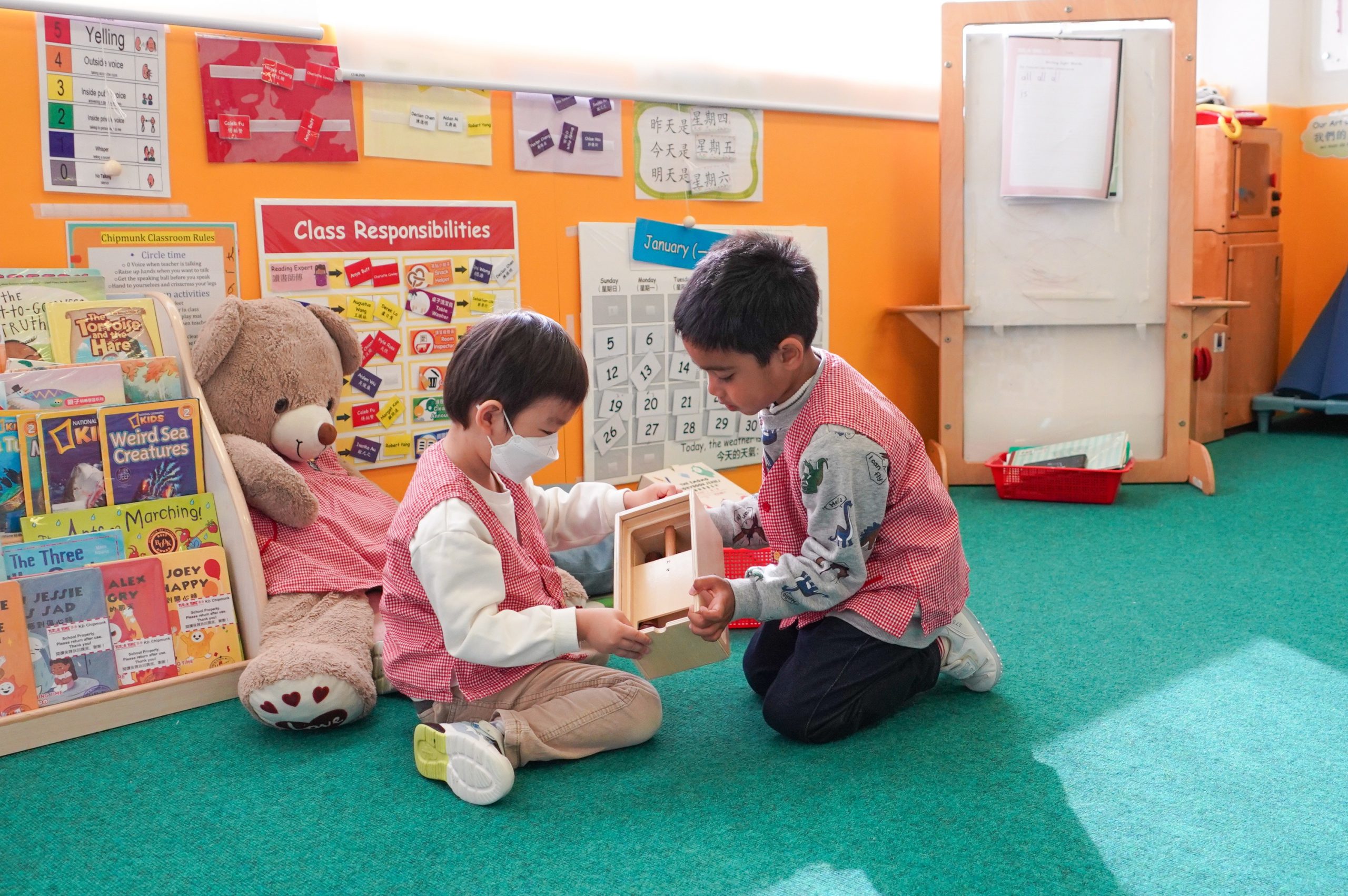
Do children who attend Nursery Programs have an advantage in Kindergarten admissions?
Many parents in Hong Kong choose to enrol their children in a Nursery Program because they believe that it will help with their Kindergarten applications. In our experience, this is a nuanced topic with many factors to consider.
Discretionary admissions
As much as parents want to believe that attending a certain Nursery Program guarantees admission into Kindergarten, it’s important to remember that Kindergartens will likely have terms that state that admissions are completely up to the school’s discretion.
Schools that offer a full pathway
While most schools won’t guarantee Kindergarten admissions if you attend their Nursery Program, some will make it easier for your child to continue in their program. For example, at Tutor Time, students who attend Nursery do not have to complete any additional interviews or tests to apply for Kindergarten.
Language skills
Instead of focusing solely on admissions, Nursery Programs can help your child become more competitive for Kindergarten Programs in other ways. One of the most important things that children develop in Nursery is their language skills. Full-immersion language programs, like Tutor Time’s program, enhance children’s speaking, listening, and writing skills, helping them perform better in Kindergarten interviews.
Social & emotional skills
Some Nursery Programs are beginning to incorporate social & emotional learning into their curriculum, such as our Second Step Program and Emomo SEL Program. Additionally, Nursery Programs give children a chance to socialize and develop key skills like sharing, taking turns, empathy, and so on. This is particularly helpful for shy children or children with no siblings.
Self-care & life skills
Nursery aged children are ready to learn self-care skills, such as washing their hands, using the toilet, cleaning up after playing, self-dressing, and so on. Building these skills helps children to develop self-confidence and high self-esteem. At Tutor Time, our facilities are all designed to encourage children to be independent, from child-sized washrooms in every classroom, to easily-accessible shelves.
Additional Resources
Looking for additional guidance on selecting a Nursery Program in Hong Kong? Miss Vikki (Principal of Tutor Time YOHO Campus) shares her professional insights on the different kinds of Nursery Programs and how to select one for your child. Watch the video here.
Conclusion
Hong Kong is home to a wide variety of Nursery Programs ranging from public to private, local to international, and so on. Choosing the right Nursery Program is a very personal decision for each family, and what other people do does not always represent what is best for your child. Our best advice is to create a list of priorities, then research schools that fit your criteria. Next, visit each school to narrow down your list, and finally, choose the one that you feel best aligns with your child’s needs. At the end of the day, the best Nursery Program is the one that your child can thrive in and develop a solid foundation for future learning.


 Mon-Sat