





Has your child ever woken up crying at night when they realize they are sleeping alone? Or do they have meltdowns when you leave for a few minutes? These could be signs of separation anxiety in young children. Although separation anxiety is normal, the constant emotional rollercoaster can take a toll on both children and parents. In this article, we will guide you through the causes, signs, and research-backed methods of how to handle separation anxiety, so that you and your child can navigate this stage with ease.
What is separation anxiety in young children?
Separation anxiety is a normal developmental milestone that often begins as early as 4 to 6 months and peaks around 8 or 9 months. In the infant stage, the most common signs are extreme clinginess and severe crying when a caregiver leaves the room or the house. As children grow into toddlerhood and become more mobile, these reactions can evolve into bigger tantrums, such as throwing toys or clinging to you to prevent you from leaving.
These intense emotions are often more visible during transitions, such as starting preschool or daycare. As children are adjusting to new environments, they may struggle and even fear going to school. While these phases can be challenging for parents, it is a natural part of growth and will gradually resolve by age 3.
Signs of separation anxiety
- Excessive and severe crying when caregivers are away.
- Extreme clinginess to parents or caregivers.
- Refusing to go to sleep alone or waking up crying during the night.
- Emotional and physical tantrums when a caregiver attempts to leave.
- Fear of strangers and resistance to being cared for by unfamiliar people.
- Refusing to go to school or daycare during shifts in the environment.
How long does separation anxiety last?
Children naturally desire closeness to their caregivers. It is only when your child is securely attached to you that they will feel unsure, or even fear that you may not come back once you are out of sight. This is why separation anxiety is actually a sign that your baby is forming a healthy attachment to you.
Read more: Baby Attachment Theory: Understanding The 4 Attachment Styles – Tutor Time
Just remember, separation anxiety is just like another developmental milestone – it’s something your child faces as they learn and develop independence. As your child grows, the reasons for separation anxiety shift based on their brain development. Understanding the “why” at each stage can help you provide suitable separation anxiety support:
4-7 months
At this stage, infants start forming stranger awareness. They can tell the difference between “mom” or “dad” and everyone else. This is why infants start to display a preference for their primary caregivers, and may feel uneasy around “new people”, like relatives and other strangers.
8-12 months
This period is often referred to as the “Velcro baby” phrase, and usually occurs when separation anxiety begins and reaches its peak. As infants start to form an understanding of object permanence, they realize you still exist when you leave, but don’t know where you are or whether you will come back. They also lack the language skills to express these feelings and often end up crying instead.
10-18 months
At this stage, toddlers are increasing in mobility but still lack emotional regulation skills. As they move from crawling to walking, their anxiety levels may increase or decrease depending on the child. Increased mobility may make them feel more vulnerable, as they can walk away and feel lost, or more secure as they gain the ability to move toward their parents. They also begin to develop a basic awareness of time and separation, but they do not yet have an accurate understanding of what “5 minutes” or “1 hour” means.
18 – 30 months
Toddlers during this period are gradually developing independence. They are curious and want to explore more, but they realise that separation from their caregiver can feel scary. They may feel unfamiliar and insecure in new environments, and this is often when preschool anxiety arises.
3 years old onwards
From around 3 years old onwards, children generally understand that their parents will return and can use language to express their feelings more clearly. At this stage, separation anxiety usually begins to fade, although the timing can vary greatly depending on your child’s attachment style.
5 Tips on how to handle separation anxiety in infants and toddlers
Physical presence and comfort
At the infant stage, a child’s primary fear is separation from their main caregivers. The most effective solution is physical presence and comfort. Holding, hugging, and staying close when your baby is crying or showing signs of panic helps them establish a sense of safety and security. If possible, parents can try gradually increasing separation time as your child becomes more comfortable.
Keep school routines as regular as possible
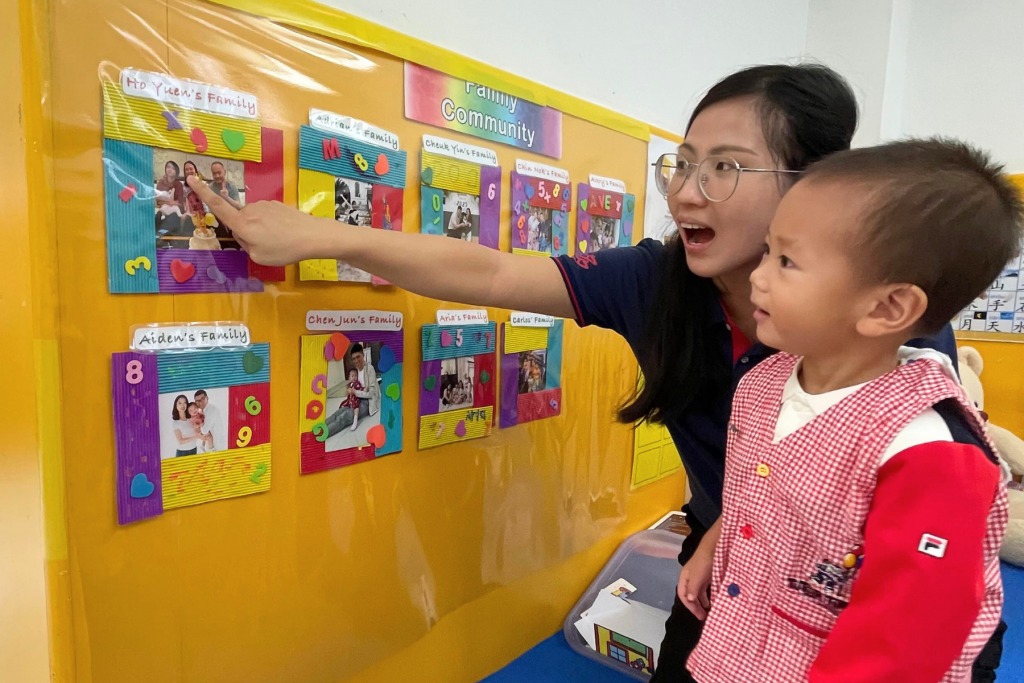
As children grow into toddlers and begin independent schooling, their fear often shifts from missing their caregiver to a general discomfort with new environments. Therefore, consistency is key in helping toddlers feel safe. Joining a playgroup before nursery can be highly beneficial in helping children become familiar with school routines and environments. Playgroups such as the Tutor Time WOW Activity Group are specially designed to mirror our Nursery class routine, allowing children to transition more smoothly from accompanied playgroup to unaccompanied Nursery, reducing preschool separation anxiety.
One to two weeks before starting school, you can begin talking to your child about their new adventure to build excitement and curiosity. Gradually introduce school-like routines at home, such as waking up earlier, practicing putting on shoes, or having breakfast at the same time they do on school days.
Use visual aids
Visual tools could help toddlers understand the concept of time more concretely. You can consider using a calendar to help your child understand and count down the days until school begins. You can also use a ‘routine chart’ to let your child understand what a school day looks like in advance. At Tutor Time, our Nursery program also uses visual routines and schedules during class to help children get through the transition smoothly.
Offer a comfort item
You can give your child a comfort item to bring to school, such as their favourite toy, blanket, or family photo, that can provide emotional security. These items serve as a reminder of home and help ease transitions in unfamiliar settings.
Use goodbye rituals
Creating a short, loving, and strong goodbye ritual can be all it takes to help with transitions, such as a hug, a goodbye song, and a simple phrase like “see you later, alligator.” Anything that you can do consistently before any goodbye and school drop-off to reduce preschool separation anxiety.
Conclusion
Handling separation anxiety can feel overwhelming at times, but it is also a beautiful sign of the deep parent-child bond you have built together. It shows that your child feels safe, connected, and secure with you. With patience, consistency, and the right strategies, you’ll be able to navigate this period with greater confidence and ease.
For more information on how to handle separation anxiety in pre-nursery and kindergarten, check out our Back to School Video Series!


 Mon-Sat