





Introduction
“Exercise keeps you healthy!” You’ve probably heard this countless times. While it’s true that exercise strengthens the body and keeps you fit, its benefits for children’s brains and learning abilities are often overlooked.
The neuroscience of exercise
Neuroscience research shows that regular exercise does more than just keep the body active—it actually “nurtures” the brain. An adequate amount of physical activity stimulates the growth of new neurons, increases levels of BDNF (a key protein that supports brain development), and helps the brain form faster and more efficient connections. This means that regular exercise can boost children’s learning, memory, and concentration, and can even form a positive cycle in the long run: children feel happier, their learning improves, and better academic results give them a sense of achievement. This motivation, in turn, encourages them to enjoy exercise even more.
Scientific Exercise Guide for Ages 0–6
While unstructured play can count as exercise, your child’s body and brain require specific types of movement at each age and stage to support healthy development. Here are some expert recommendations according to each stage of your child’s growth.
Age 0-1: Developing core muscles and sensory coordination
Key Movements
Plenty of tummy time, crawling, and sensory exploration! These are the very first steps in spatial exploration and sensory-motor integration.
Recommendations
Avoid keeping your baby in strollers or highchairs for more than an hour at a time while awake. Instead, incorporate multiple tummy time sessions, encouraging head-turning, hand-reaching, rolling, and crawling throughout the day. You can also hold your baby and gently sway to music, or do simple stretching exercises, such as softly moving your baby’s arms and legs to the rhythm of a song. These exercises help develop core muscles, stimulate your child’s senses, and strengthen parent-child bonding.
Duration
Movement should be spread throughout the day with no strict requirement for continuous activity. The main focus is to reduce long periods of sedentary time.
Brain Boost
Crawling and stretching stimulate the vestibular system (which helps children control body balance) and the proprioceptive system (which helps them sense and respond to motion). These systems build the foundation for spatial awareness and coordination, which are essential abilities for developing attention span.
Age 1-3: Mastering Fundamental Movement Skills
Key Movements
From walking to running, jumping, kicking, and throwing, this stage is all about developing fundamental movement skills and body control.
Recommendations
Aim for at least 180 minutes of physical activity of varying intensity every day, ranging from light activity (such as standing and walking) to moderate and vigorous activity (such as brisk walking, running, jumping, and climbing). Encourage ball games (throwing, kicking, chasing), sliding, free running, and chasing games in safe spaces. Dancing to music, imitating animal movements, and setting up simple obstacle courses, like crawling under tables or over a pillow pile, are also excellent activities.
Duration
Activity can be spread throughout the day and doesn’t need to be continuous. Each burst of vigorous movement may last only a few minutes, but it all adds up.
Brain Boost
Running, jumping, and climbing directly stimulate the hippocampus (which plays a role in balance and spatial awareness). In addition, following instructions during movement games helps train working memory and response control.
Age 3-6: Refining Skills and Building Rule Awareness
Key Movement
At this stage, children are ready to explore more complicated movements and play according to rules. The focus should be on refining fundamental skills, developing coordination and balance, and starting to build an awareness of rules.
Recommendations
Aim for at least 180 minutes of physical activity daily, with at least 60 minutes of moderate-to-vigorous activity (activities that increase their heart rate and make them sweat!). Keep activities fun and diverse, such as riding tricycles or balance bikes, jumping rope, playing on climbing frames, chasing games, kicking balls into goals, practicing simple dance or gymnastics moves, swimming, and joining group games with basic rules (like Duck Duck Goose or Red Light, Green Light)
Duration
Activities should be spread throughout the day as well. The 60 minutes of moderate-to-vigorous activity can be broken into short sessions. For example, 20 minutes of running and jumping in the morning, 20 minutes of biking in the afternoon, and 20 minutes of playing tag in the playground in the evening.
Brain Boost
Playing with rules can strengthen executive function skills such as waiting and taking turns. More complicated movement combinations (like running while kicking a ball) improve coordination and cognitive flexibility. Group activities also foster social-emotional learning and form the foundation for higher-level learning skills
How Exercise Boosts Learning Ability
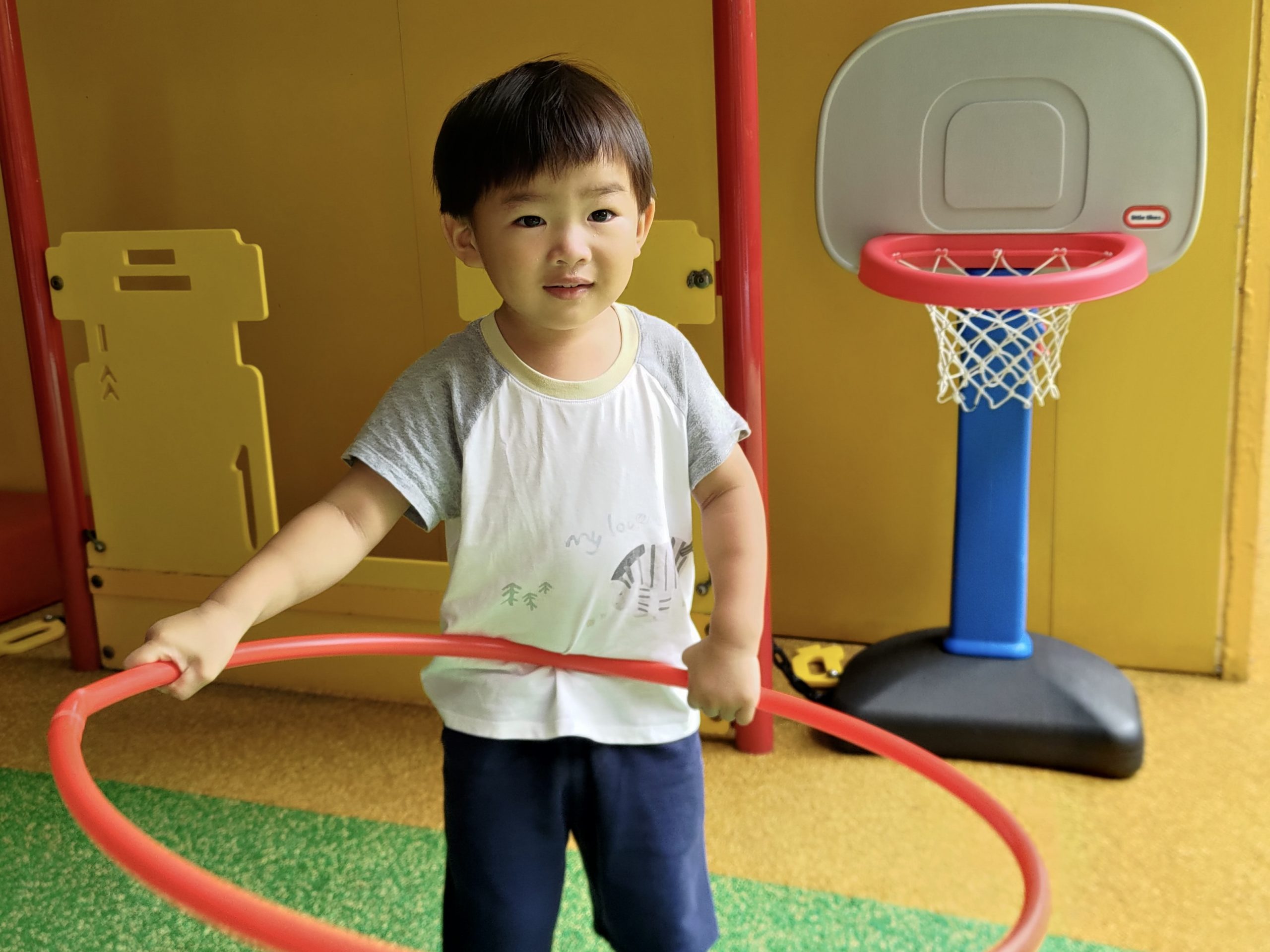
We all know exercise is good for children, but where exactly does it help the most? Neuroscience experiments and brain scans have shown that children who exercise regularly (especially aerobic activity 3-5 times per week) experience real and measurable improvements in how their brains are structured. These changes directly correlate to learning abilities and are useful in both the classroom and everyday life.
Sharper Spatial Awareness
Exercise significantly increases brain volume, especially in the hippocampus (the area responsible for spatial navigation and factual memory). It’s like expanding the brain’s “memory warehouse.” This helps children convert short-term memory into long-term storage more efficiently and perform better in tasks requiring spatial thinking (such as reading maps, understanding geometric shapes, or following experimental procedures) and helps foster a stronger foundation for success in mathematics and science.
Improved Focus and Attention
After exercise, the prefrontal cortex (the brain’s command centre) is activated. Studies such as the Flanker test show that children become better at filtering out distractions and concentrating. This translates to better engagement during lessons, blocking out distractions while doing homework, and processing complex information (like reading long passages or multi-step math problems) with a clearer head and longer attention span.
Stronger Executive Function
Children who stick to frequent, high-intensity exercise show remarkable growth in executive function, such as planning, adapting to new changes (adjusting strategies when game rules shift), and switching between different types of thinking (moving from a math problem to writing an essay). These skills improve problem-solving, creativity, and the ability to transition smoothly across subjects. They also strengthen children’s capacity for self-management in both time and tasks.
3 Ways to Make Exercise Easier and More Fun
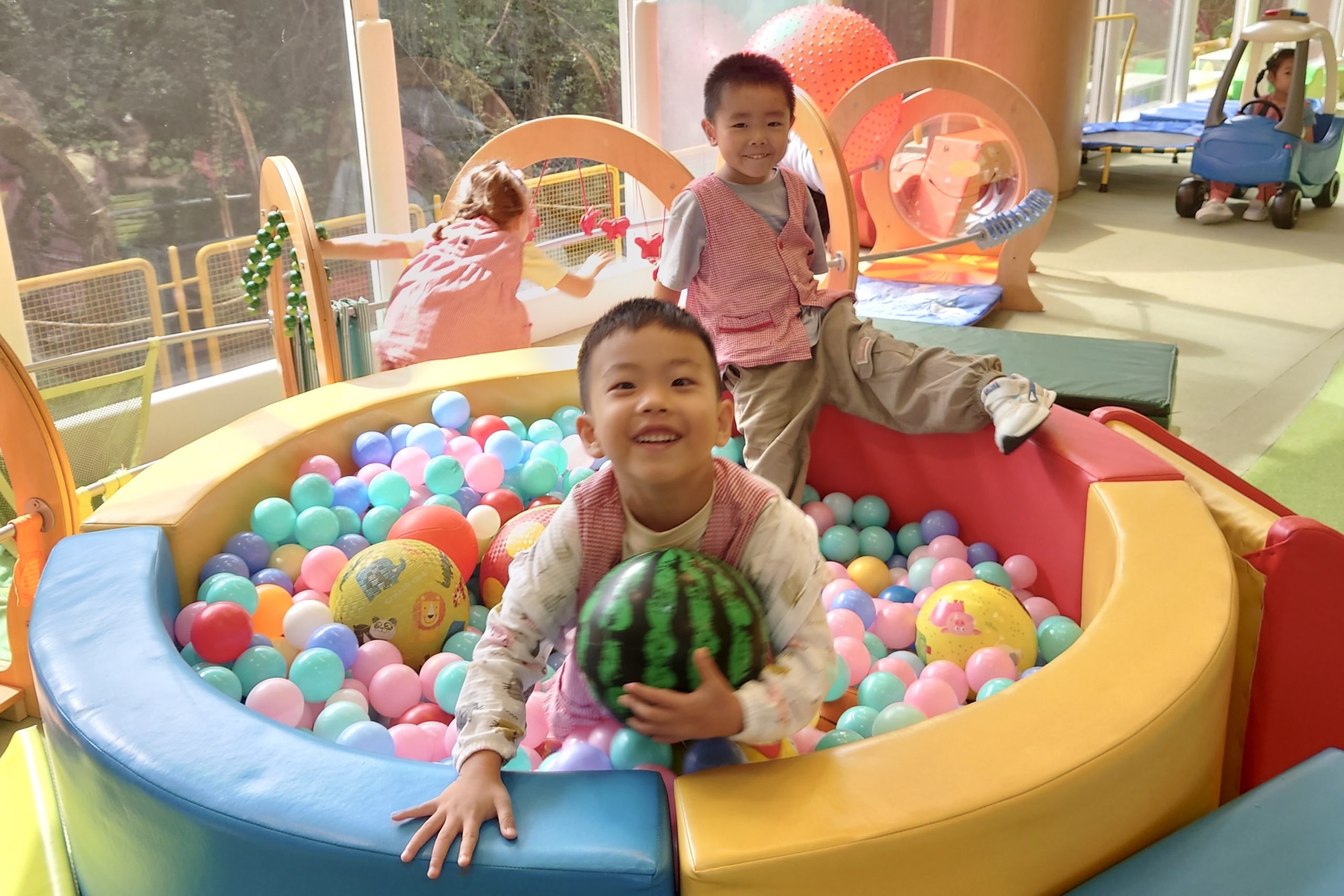
Making exercise easy and fun is the key to ensuring that children can keep up these positive long-term habits.
Frequency over Duration
Exercising 3-5 times a week (e.g., two 15-minute sessions a day) is far more effective than one long workout on the weekend. Make use of small pockets of time to do a quick “Good Morning Dance” before school, play a 10-minute game of tag after class, or hold a family “Animal Imitation Contest” before dinner.
Turn Exercise into Play
Game-based activities stimulate both the body and brain. For example, setting commands such as “Red—stop! Green—jump! Blue—spin!” during a game helps to train children’s reaction time and working memory. Also, you could create a “Treasure Hunt Adventure” with clue cards with physical tasks like crawling under a table and jumping over pillow mountains to build planning and problem-solving skills.
Use the Post-Exercise ‘Golden Learning Period’
The brain is most active after 30 minutes of exercise, which is the perfect time for focused learning or deep thinking. Guide your child to switch into calm but concentration-heavy activities, such as reading picture books, doing puzzles, or playing math games. Learning efficiency, memory, and problem-solving power all get a boost!
Conclusion
The benefits of exercise go far beyond building a strong and healthy body. Cultivating a regular exercise routine equips your child with a “learning accelerator” by optimizing brain structure, stimulating neural activity, and sharpening higher-level cognitive skills. With the right kind of physical activity, children can enjoy different sports, games, and movements, while laying a solid foundation for future growth and development.
Discover more professional knowledge on joyful learning and parenting at Kidsworld Parent Hub by Tutor Time
References:
- World Health Organization. (2019). Physical Activity Guidelines for Children Under Five Years of Age.
- American Academy of Pediatrics. (2023). Back to Sleep, Tummy to Play.
- https://publications.aap.org/pediatrics/article/145/3/e20193992/36817/Physical-Activity-Assessment-and-Counseling-in?autologincheck=redirected
- https://developingchild.harvard.edu/science/key-concepts/brain-architecture/


 Mon-Sat